King Solomon
Karl Goldmark — The Queen of Sheba

Karl Goldmark — The Queen of Sheba
Goldmark's wise king — the still centre around which the love triangle burns.
Solomon is not the lover, and that is the point. Goldmark's grand opera throws its heat at Assad, the Queen, and Sulamith — three voices consumed by desire — and sets the baritone above all of it as the one figure who does not want. He judges. When Assad blasphemes in the Temple and calls the Queen his god, it is Solomon who must read the room, see through her plea, and choose exile over execution. The role is the law made audible.
I sing him as restraint, not coldness. The temptation is to play wisdom as distance — but Solomon is moved; he simply refuses to be ruled by it. The verdict that spares Assad's life is an act of mercy disguised as procedure. The whole evening tilts on a man deciding, in real time, how much justice a kingdom can survive.
Vocally the writing is broad and sustained, German declamation carried over Goldmark's thick orchestral colour. The baritone cannot push against that texture; it must sit on top of it with authority and ease, the line unhurried, the words weighted. Each pronouncement has to land as if there were no appeal.
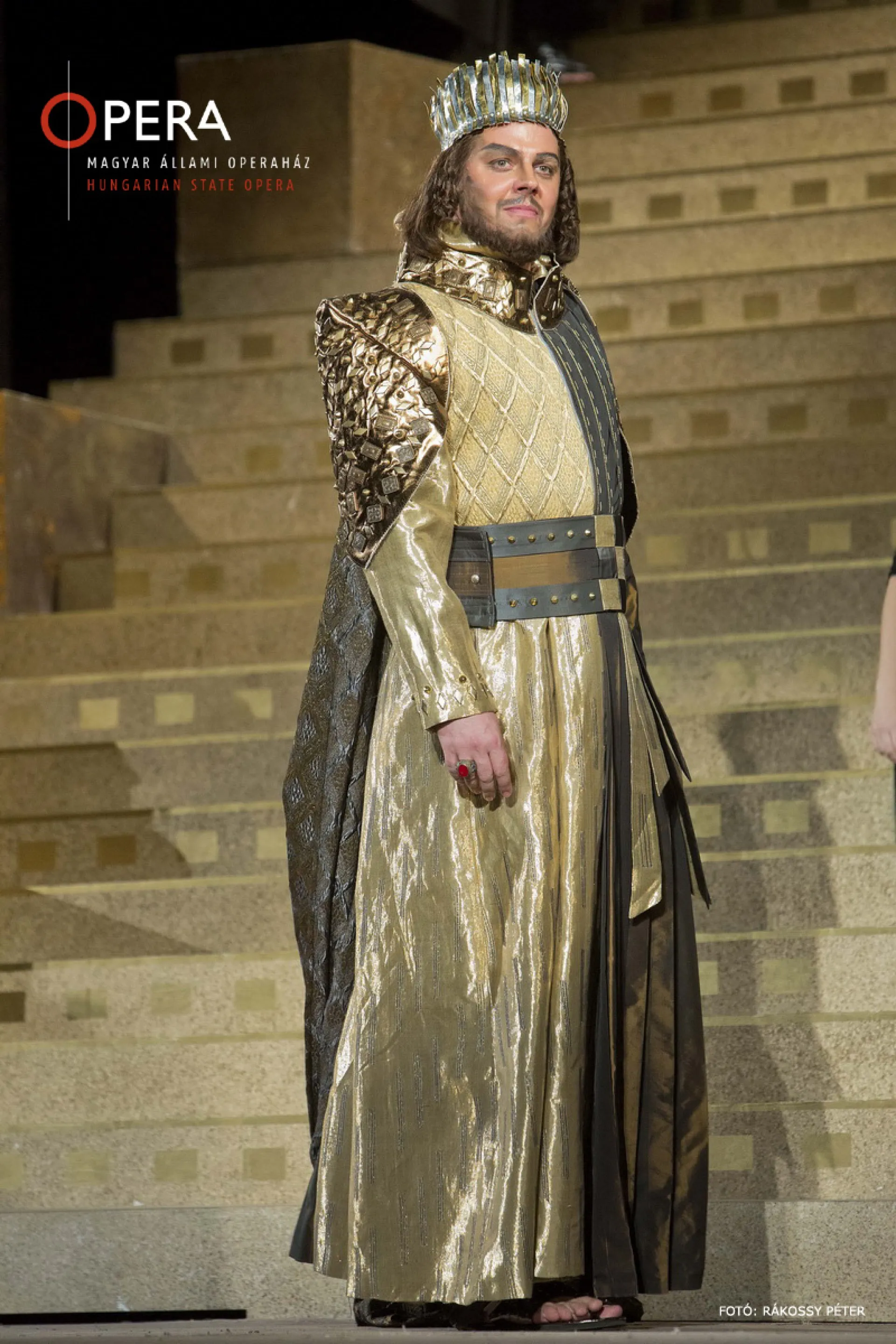
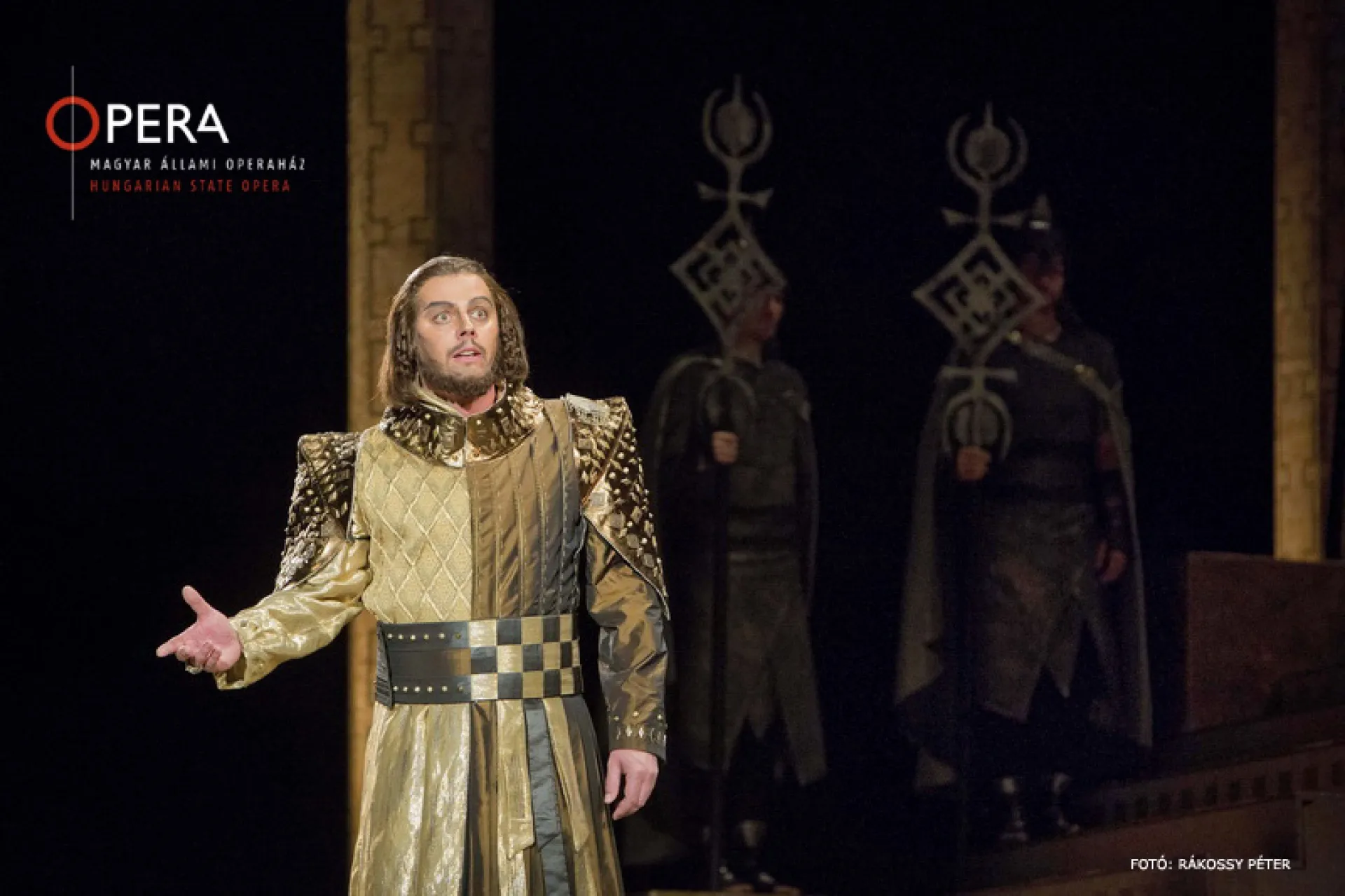
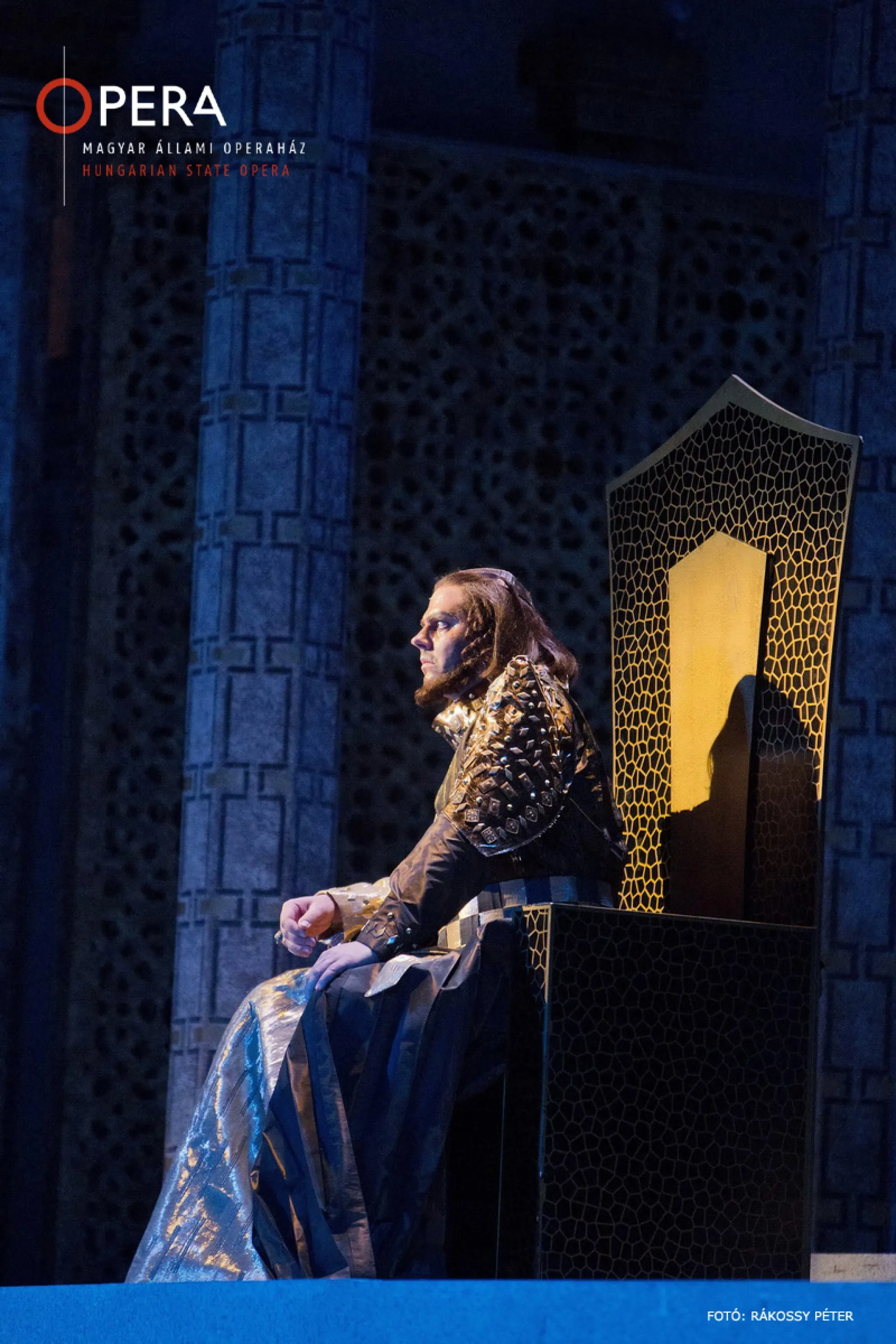
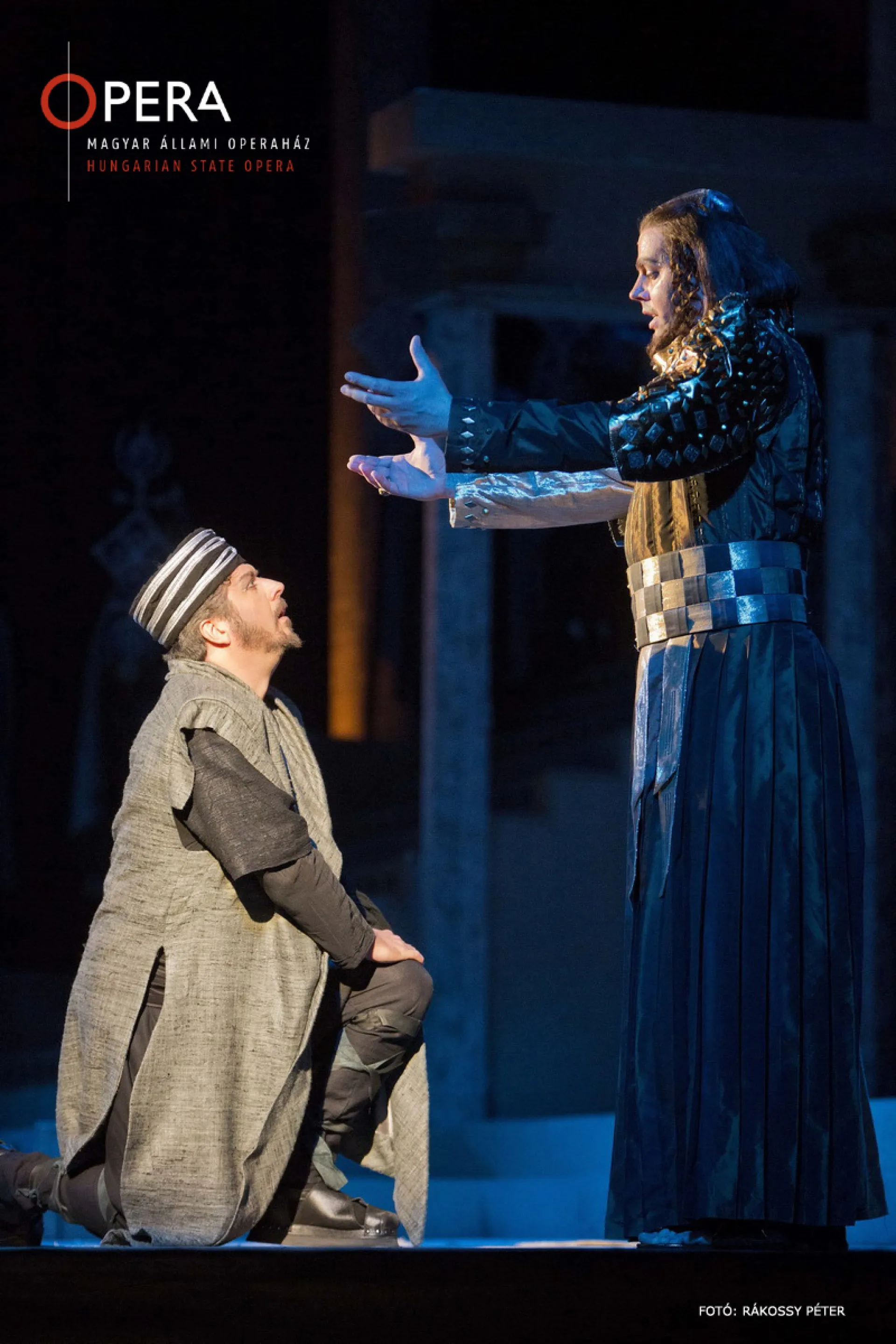
Production photographs from recent The Queen of Sheba stagings.

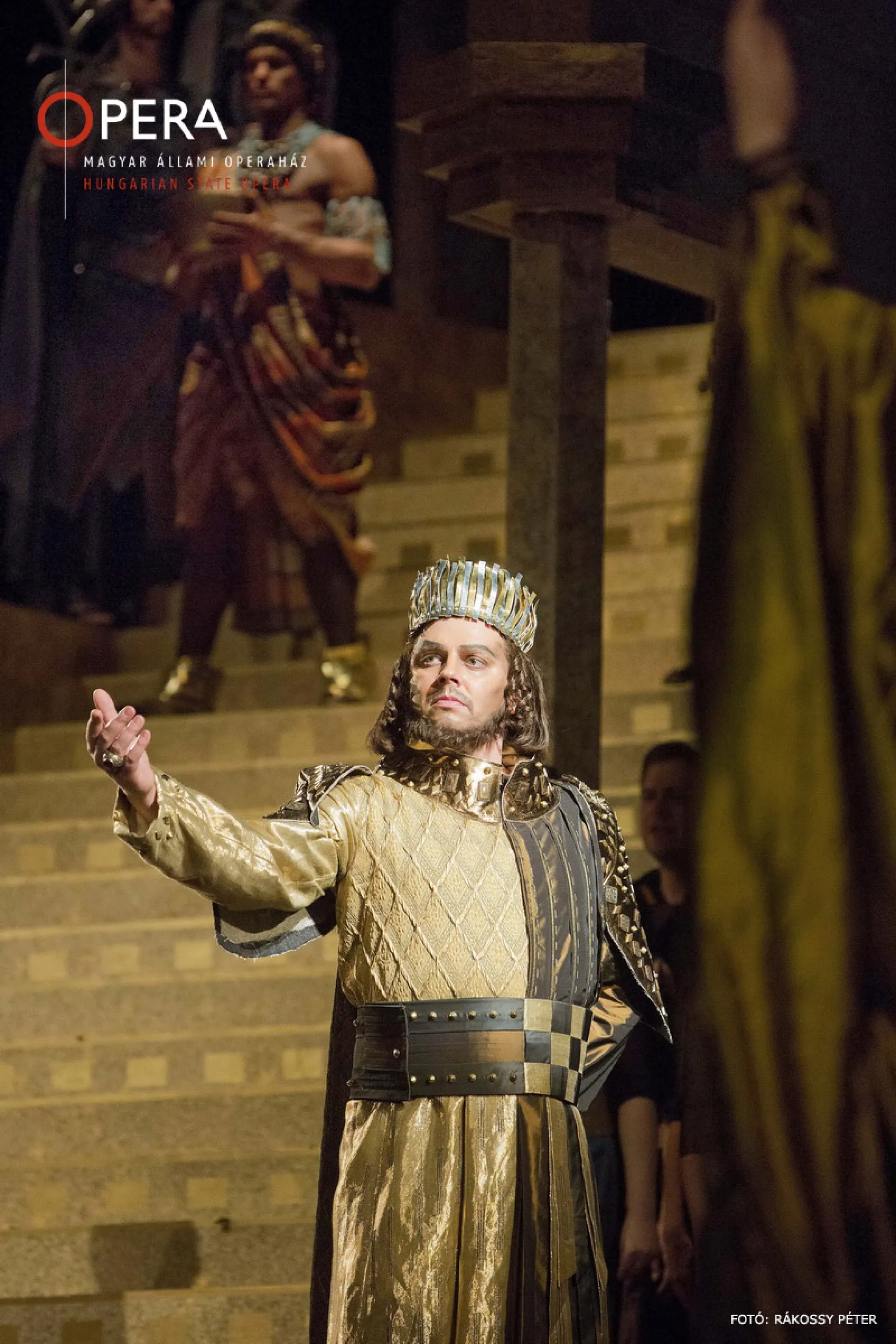
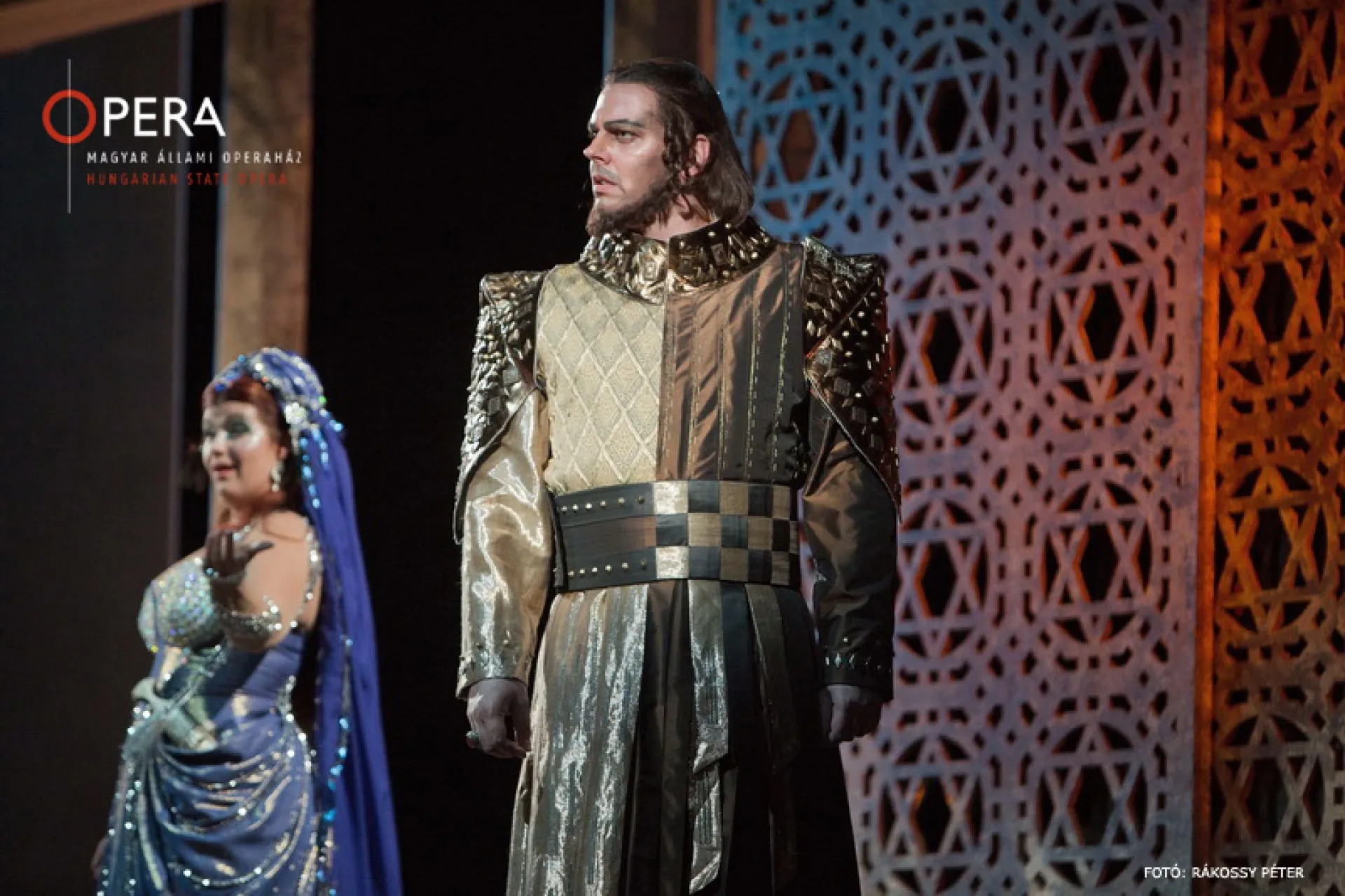
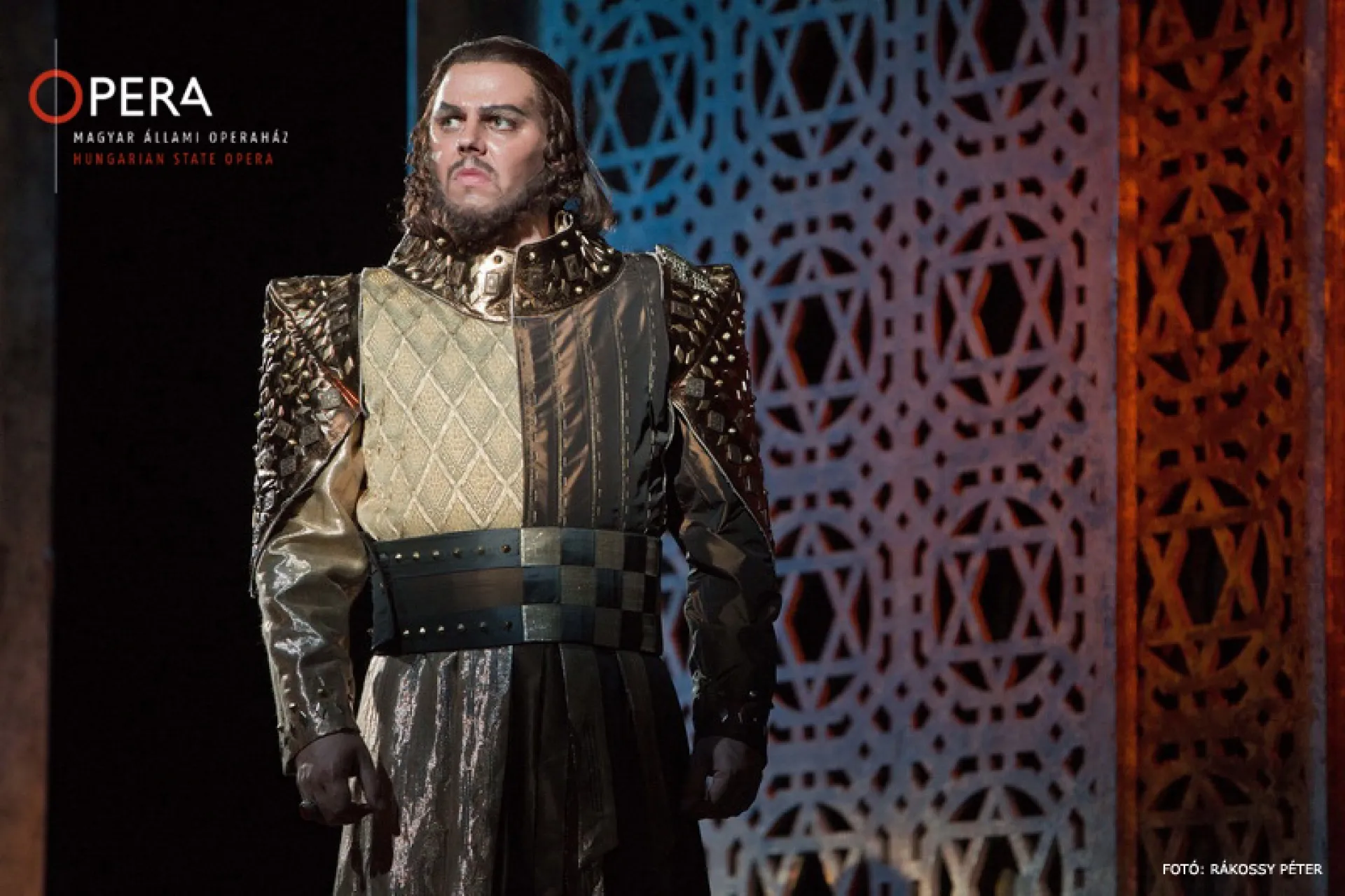
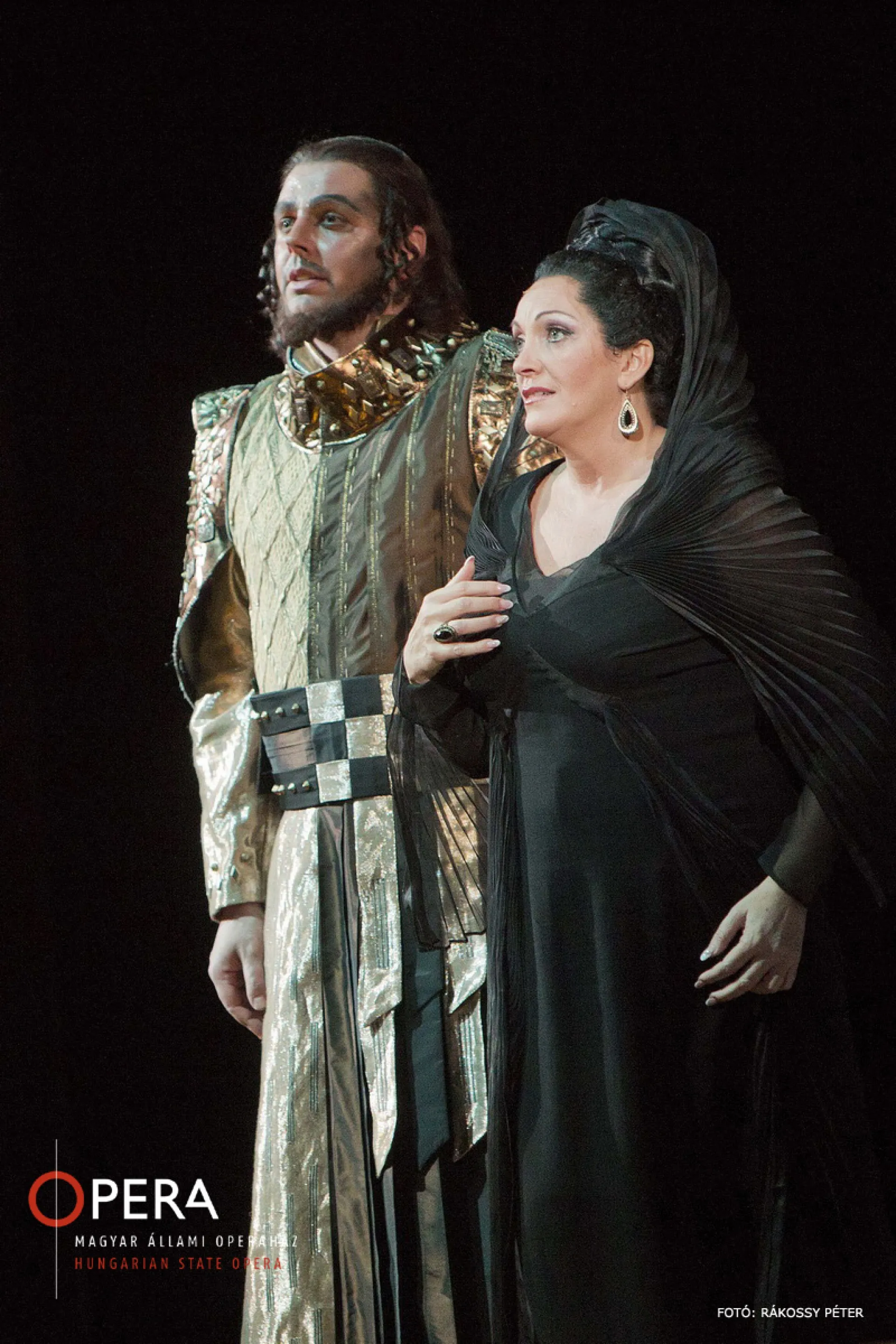
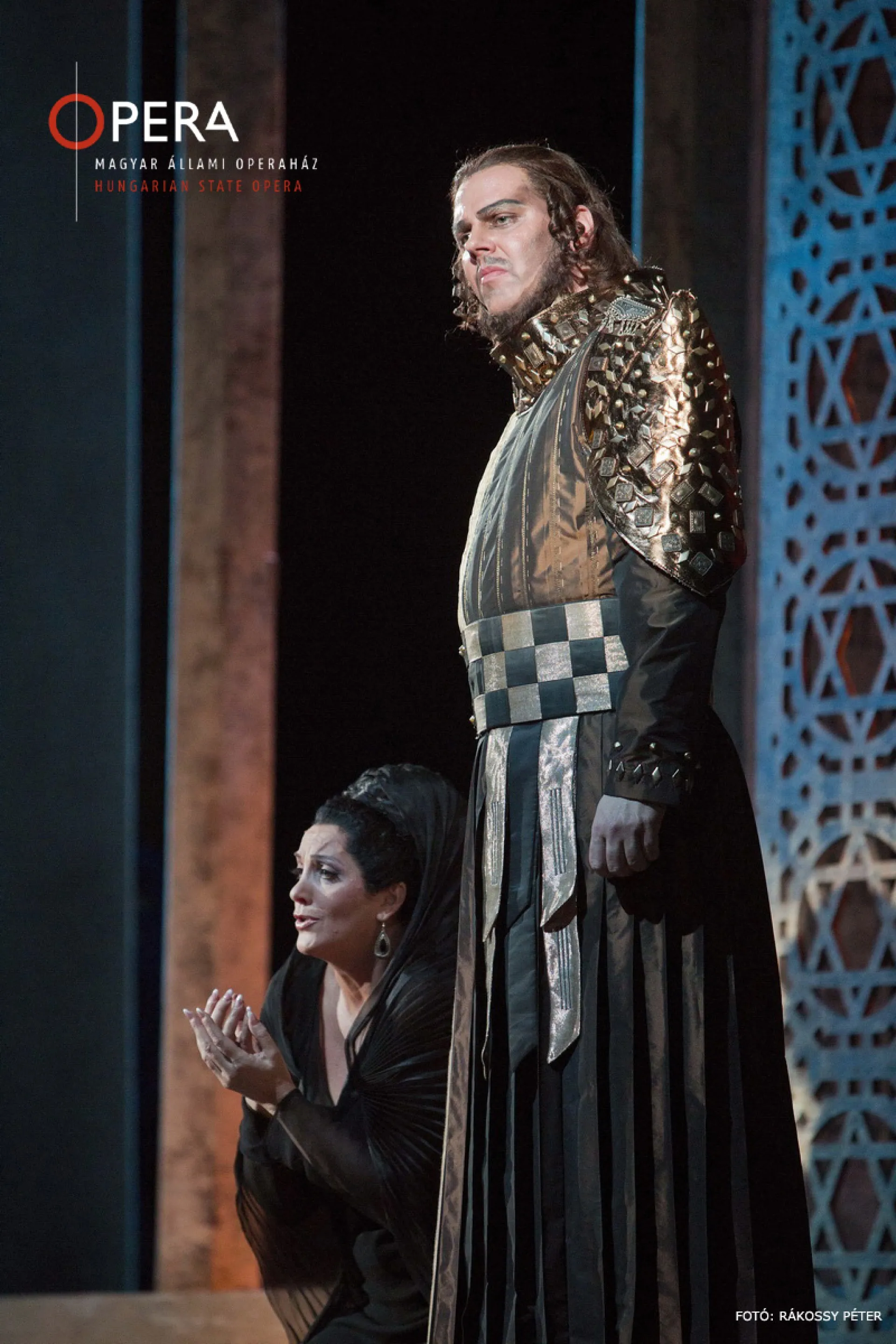
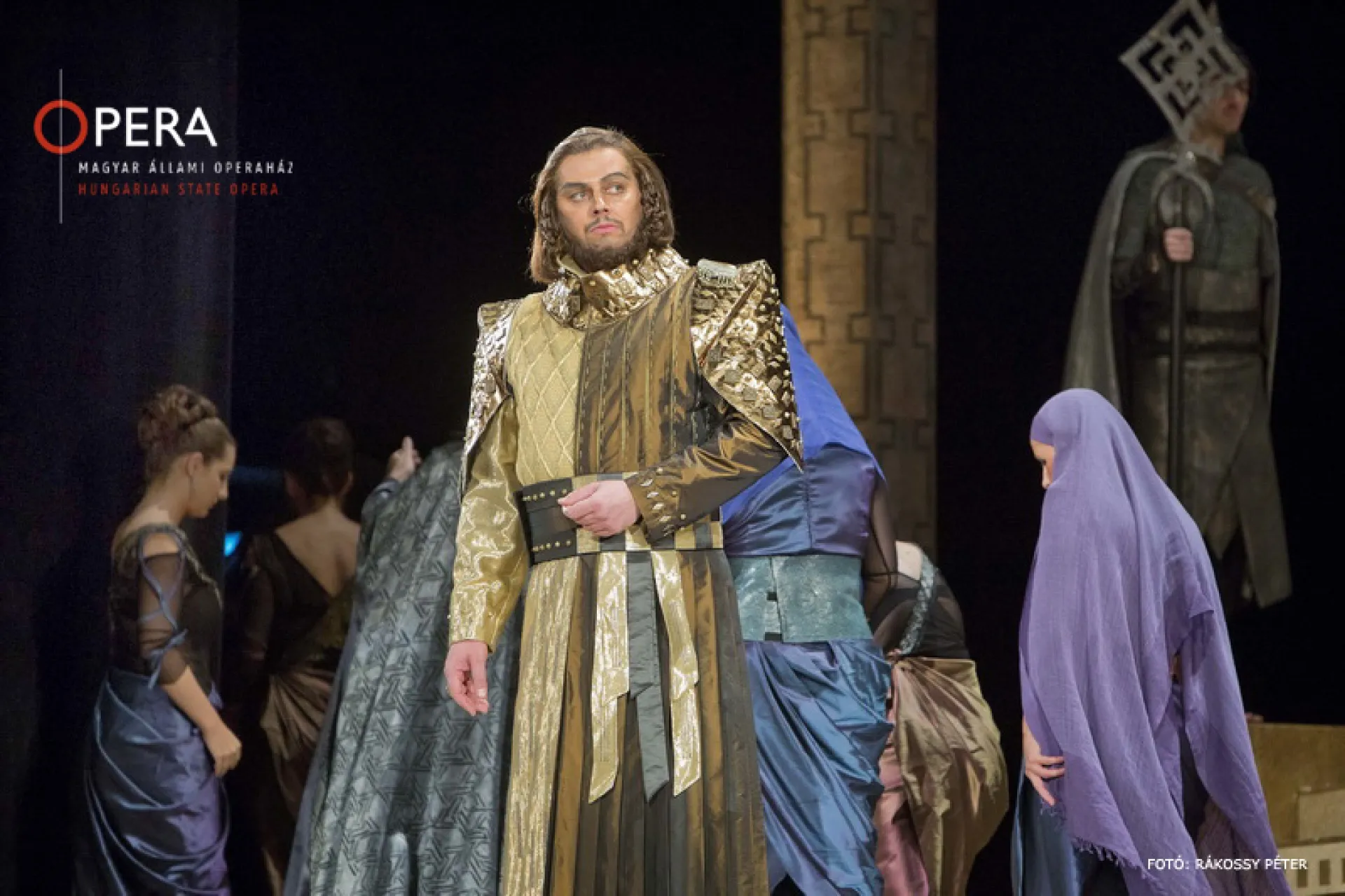
Press · high-resolution stills available on request → Press kit
Revivals and new productions of Goldmark's The Queen of Sheba welcome from the 2027 / 2028 season onward. Concert performances of the role open to discussion.